3152 Peregrine Drive NE Suite 200 Grand Rapids, MI 49525

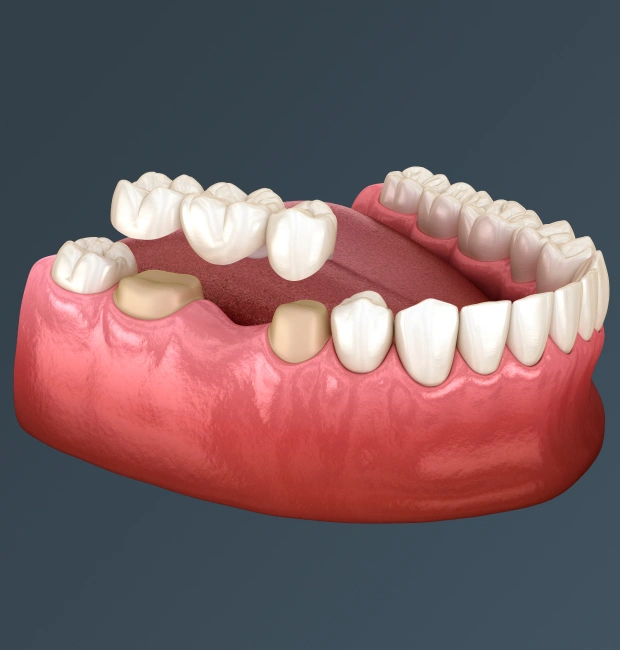
Bridge the Gap in Your Smile
A missing tooth does more than affect the appearance of your smile. Over time, the surrounding teeth begin to shift into the empty space, the bite becomes uneven, and the jawbone in that area starts to deteriorate. A dental bridge addresses the problem directly by filling the gap with a fixed, custom-crafted restoration that looks, feels, and functions like your natural teeth.
At Knapp Dental Lodge, we design and place dental bridges that are precisely matched to the color, shape, and size of your surrounding teeth. The result is a seamless restoration that restores your smile and your bite in a way that feels entirely natural. For patients who are not candidates for dental implants or prefer a fixed alternative to a removable partial denture, a bridge is an excellent long-term solution.
Request a Consultation
How Does a Dental Bridge Work
A dental bridge literally bridges the gap created by one or more missing teeth. It consists of one or more prosthetic teeth, called pontics, that are anchored in place by crowns placed over the natural teeth on either side of the gap. These anchoring teeth, known as abutment teeth, are prepared by removing a small amount of enamel to accommodate the crowns that will support the bridge.
Once the bridge is permanently cemented in place, it functions as a single, fixed unit. There is nothing to remove, nothing to adjust daily, and no need for adhesives. You brush and care for it much like your natural teeth, with special attention to cleaning beneath the pontic where it meets the gumline.
At Knapp Dental Lodge, every bridge is custom-fabricated from high-quality materials selected for both durability and aesthetics, ensuring a restoration that blends naturally with your smile and holds up well to the demands of everyday use.
What to Expect From the Bridge Process

Prev
Next
Types of Dental Bridges
- Traditional Dental Bridge: The most common type of dental bridge, a traditional bridge, uses the natural teeth on either side of the gap as abutments to support the prosthetic tooth or teeth in between. It is a well-established, reliable solution suitable for most patients with healthy teeth adjacent to the missing tooth space.
- Cantilever Bridge: A cantilever bridge is used when there is only one natural tooth available adjacent to the gap, rather than teeth on both sides. The pontic is supported by a single abutment tooth. This option is less common and is typically reserved for specific clinical situations where a traditional bridge is not feasible.
- Implant-Supported Bridge: For patients who are missing multiple consecutive teeth and are candidates for dental implants, an implant-supported bridge offers an alternative that does not require preparation of the adjacent natural teeth. Instead of being anchored to natural teeth, the bridge is supported by implants placed at either end of the gap. This option preserves the surrounding teeth entirely and provides the bone-preserving benefits associated with implant treatment.
Do Not Let a Missing Tooth Define Your Smile
A missing tooth left untreated will almost always lead to further dental problems down the road. Shifting teeth, bone loss, bite changes, and increased wear on the remaining teeth are all consequences that develop gradually but become increasingly difficult and costly to address over time. A dental bridge is a proven, durable solution that stops those consequences before they take hold.
At Knapp Dental Lodge, our Grand Rapids dental team is committed to providing restorations that are as functional as they are beautiful. If you are ready to restore your smile with a solution you can count on, we would love to hear from you.
Schedule Your Bridge Consultation Today
Frequently Asked Questions
How long does a dental bridge last?
With proper care, a dental bridge can last anywhere from ten to fifteen years, and often longer. The longevity of your bridge depends on the quality of the materials used, the health of the supporting teeth and gum tissue, and your daily oral hygiene habits. Attending regular dental cleanings and exams gives our team the opportunity to monitor the condition of your bridge and address any concerns before they affect its longevity.
Is getting a dental bridge painful?
The bridge process is not painful. Local anesthesia is used during the tooth preparation appointment to keep you comfortable, and most patients experience only mild sensitivity in the days following preparation while the temporary bridge is in place. Once the permanent bridge is cemented, most patients find it feels entirely comfortable and natural within a short adjustment period.
How do I clean under a dental bridge?
Cleaning beneath the pontic, the prosthetic tooth that spans the gap, requires a little extra attention since a regular toothbrush cannot reach that area. Floss threaders, interdental brushes, or a water flosser are all effective tools for cleaning beneath the bridge and along the gumline. Our team will demonstrate the best technique for keeping your bridge clean at your fitting appointment.
What is the difference between a dental bridge and a dental implant?
A dental bridge is a fixed restoration anchored to the natural teeth adjacent to the gap, while a dental implant replaces the missing tooth root directly in the jawbone. Implants preserve jawbone density and do not require alteration of the neighboring teeth, making them the preferred option for many patients. However, bridges are a proven and effective alternative for patients who are not implant candidates or prefer a shorter treatment timeline. Our team will help you weigh both options during your consultation.
Will my dental bridge look natural?
Yes. Every bridge we place at Knapp Dental Lodge is custom fabricated to match the color, shape, and size of your surrounding natural teeth. The materials we use are selected for their aesthetic qualities as well as their durability, ensuring a restoration that blends seamlessly into your smile. Most patients find that their bridge is completely indistinguishable from their natural teeth.
Does dental insurance cover dental bridges?
Many dental insurance plans cover a portion of the cost of a dental bridge as a restorative procedure, though coverage details vary by plan. Our front office team will review your benefits before your appointment and help you understand your out-of-pocket costs. Patients without adequate insurance coverage are welcome to ask about our in-house membership plan and available financing options to help make treatment accessible.